
This is an archived page from a past event.
Please see the Seminars start page for the latest information.
Meet our keynote speakers
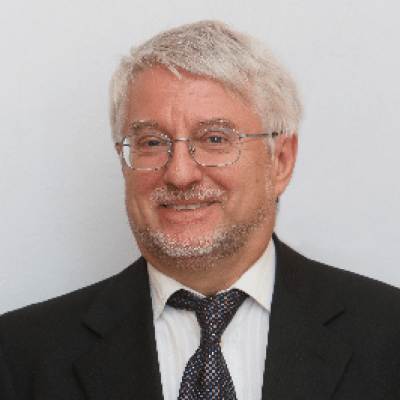
Professor Alessandro Antonietti
Università Cattolica Milan, Italy
Info to come
Alessandro Antonietti, full professor of Applied Cognitive Psychology at Università Cattolica del Sacro Cuore, Milan, Italy. His interests concern learning and cognitive processes, with a focus on creativity, problem solving and decision making. He devised assessment tools and training programs to enhance and rehabilitate skills across the lifespan.
See full profile: https://docenti.unicatt.it/ppd2/en/docenti/03198/alessandro-antonietti/profilo

Professor Alice Cancer
Università Cattolica Milan, Italy
Info to come
Alice Cancer, Assistant professor in General Psychology and Cognitive Enhancement at the Department of Psychology of Università Cattolica del Sacro Cuore, Milan, Italy. She is the coordinator of the UCSC Research Unit in Music Psychology. Her research interests concern neurodevelopmental disorders, and in particular developmental dyslexia. She is involved in designing and testing innovative intervention methods and she is the author of the “Rhythmic Reading Training” for dyslexia.
See full profile: https://docenti.unicatt.it/ppd2/en/docenti/37913/alice-cancer/didattica
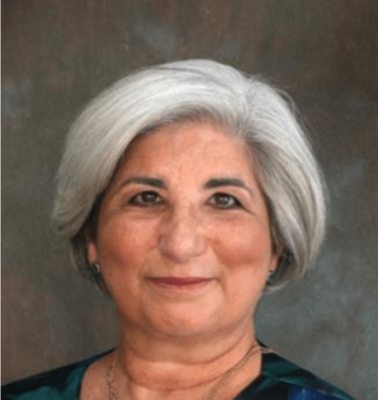
Professor Ruth Falzon
“Life Perspectives on Dyslexia:
Listening to Students”
University of Malta, Malta
Info to come
Ruth Falzon is a founding member of the Department of Counselling and collaborate with the Faculty of Education. Her areas of interest/expertise include learning, Learning Disabilities, Personal and Social Development, Emotional Intelligence/Literacy and research in school counselling.
See full profile: https://www.um.edu.mt/profile/ruthfalzon
Professor David McLoughlin
“High achieving dyslexic adults: Implications for theory and practice”
University of Buckingham, England
Info to come
David is an HCPC registered educational and occupational psychologist, an Associate Fellow of the British Psychological Society, as well as an elected member of the International Academy for Research in Learning Disabilities.
See full profile: https://www.buckingham.ac.uk/directory/dr-david-mcloughlin/
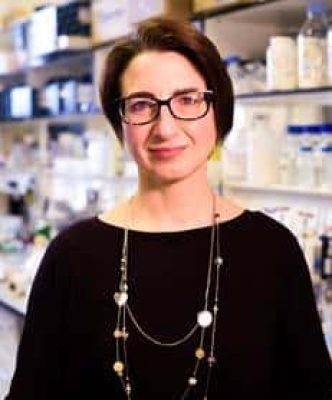
Dr Silvia Paracchini
“The Genetics of Dyslexia”
University of St. Andrews, Scotland
Approximately one out of every ten children encounters difficulties in learning to read, even when provided with an adequate learning environment and without any other cognitive or sensory impairments. Research indicates that having family members with the same condition is the most significant risk factor, suggesting a genetic basis for dyslexia.
Thanks to the utilization of big data and international collaborations on a large scale, significant progress has been made in identifying the genetic factors associated with dyslexia. This has led to the resolution of longstanding inquiries within the field.
In this talk, Silvia will provide an overview of the latest cutting-edge approaches and findings in the realm of dyslexia genetics. Furthermore, she will delve into related subjects, such as the co-occurrence of dyslexia with other conditions and the potential link between dyslexia and left-handedness. By exploring these facets, the aim is to enhance our understanding of dyslexia and its multifaceted implications
Dr Paracchini graduated in Biological Sciences at the University of Pavia and obtained a DPhil in Human Genetics from Oxford University in 2003. During her post-doctoral training in Prof. Anthony Monaco’s group at the Wellcome Trust Centre for Human Genetics, she became interested in dyslexia genetics. In 2011, she was awarded a Royal Society University Research Fellowship to set up her group at the University of St Andrews in Scotland https://neurogenetics.st-andrews.ac.uk/. In 2013, she became a member of the Young Academy of Scotland and then was elected Fellow of the Royal Society of Biology (FRSB; 2018) and Fellow of the Royal Society of Edinburgh (FRSE; 2019). She is currently the co-Director of the Institute of Behavioural and Neural Sciences and of the MSc in Digital Health in St Andrews. Recently, she started a collaboration with Canon Medical Research Europe to develop deep learning methods applied to genomic data. In 2022 she founded the Specific Learning Difficulties Network (SLDN) to coordinate multidisciplinary work around dyslexia and dyscalculia and to raise awareness around these conditions https://medicine.st-andrews.ac.uk/learning-difficulties/
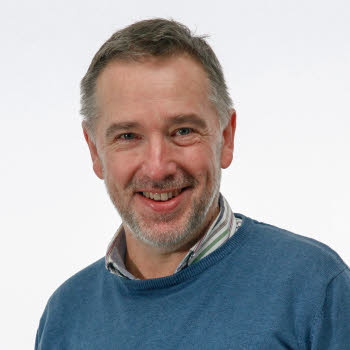
Professor John Rack
“Perspectives on Dyslexia, Past, Present and Future: An Attempt to Square the Circle”
Linnaeus University Sweden
Info to come
Info to come
See full profile: https://lnu.se/en/staff/john.rack/